


Homeowners Should Beware of Hard Water in their Homes
With summer coming to a close and fall fast approaching, now is a great time for homeowners to assess the health of their homes and make changes as needed. One of the best ways to do this is by assessing their water quality, particularly by checking if they have “hard water.” This occurs when the water has a high mineral content, often calcium or limestone.
When hard water occurs, homeowners usually require water softeners to help flush out the calcium deposits. Homeowners can usually tell if they have hard water-based on visual or physical abnormalities and abnormalities in their piping systems. Below is an in-depth overview of each of these.
Sign 1: Visual Abnormalities
The first signs of hard water that homeowners must look out for are visual abnormalities. With hard water, there will usually be very obvious signs in areas where water is usually used, such as:
- Dishware - mineral deposits can lead to water spots on dishware when one should typically use water to clean the dishes
- Faucets - residue can build up on the inside of the faucet and restrict water flow
- Soap scum - white chalky residue can show up on bathroom surfaces
If homeowners notice any of these listed above, these are pretty obvious signs of a hard water issue. In particular, if they notice multiple of these - like spotting on their dishes and slowed water and gunk in their faucets, they can be almost certain they are struggling with hard water issues.
Sign 2: Physical Abnormalities
The second signs of hard water that homeowners must look out for are physical abnormalities, namely, bodily reactions when they and their families contact water. After taking a shower or bath, homeowners should beware of dry, itchy, or irritated skin. After all, washing off should clear off any irritants rather than introducing them!
In addition, since water is used in the washing process for clothes, if homeowners and their families notice that their clothing is particularly stiff or that they are experiencing scratching or itching while wearing their clothes, this is a very obvious signal of hard water. The minerals contained in the water are probably causing this irritation.
Sign 3: Pipe Abnormalities
Last but not least, the third signs of hard water are issues with the pipes. While these may be slightly less obvious than the visual and physical abnormalities described above, they are still important to look out for. When mineral deposits build up in the pipes, this can heavily impact water flow and lead to clogging or, in severe cases, pipe breaks.
If homeowners notice gradual decreases in water pressure, this is a potential sign that they may be dealing with hard water, especially if there are other visual or physical signs. Additionally, pipe clogs can worsen with mineral deposits, especially in pipes already susceptible to backups. Pipe breaks can result if there is excessive pressure due to this clogging, which is most certainly not what homeowners want to deal with!
About City Plumbing
City Plumbing of Philadelphia, PA is a full-service plumbing and HVAC company that operates with the motto of “we turn nightmares into pipe dreams.” Their team of experts has over 20 years of expertise and guarantees quality and reliability for every one of their customers. Call them today for plumbing service in Philadelphia, PA!
)
)
)
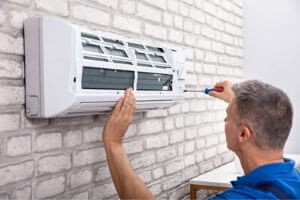 After the right location for an indoor unit is selected, a hole is cut through the wall to pass pipes to the outdoor unit.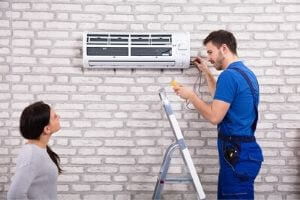
 Regularly replace or clean the AC filter. Dirty filters prevent adequate airflow and reduce the efficiency of the system. Replacing a worn-out filter can minimize the energy consumption of your AC by up to 15%.
)
)
)
)